



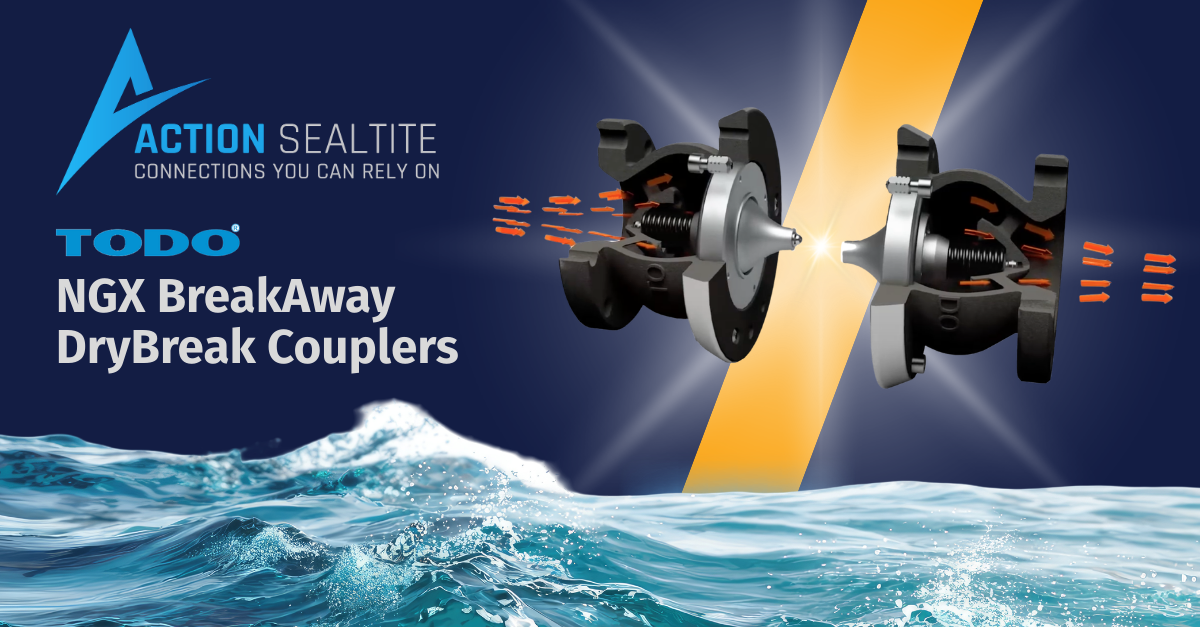
Offshore operations present some of the most harsh and unpredictable working conditions in the world. Whether transferring crude oil, LNG, chemicals, or other media between vessels and offshore platforms, operators must ensure absolute reliability in every link of their transfer systems. In this high‑risk environment, Marine Breakaway Couplings (MBCs) have become a critical safety component.
Breakaway couplings protect people, equipment, and the environment from the consequences of unexpected line separation or excessive surge pressure.
At Action Sealtite, we understand the challenges offshore operators face daily. This guide explores what MBCs are, why they are essential, and how they enhance operational safety in marine and offshore applications.
What Are Marine Breakaway Couplings?
Marine Breakaway Couplings are specialised safety devices fitted into loading hoses or transfer lines. Their primary function is to automatically separate when a predetermined tensile load or internal pressure surge is reached.
This engineered breakaway prevents:
- Catastrophic hose rupture
- Uncontrolled product discharge
- Damage to loading equipment
- Environmental contamination
- Risks to crew safety
An MBC ensures that, in an emergency, the hose system separates cleanly and seals both ends instantly, minimising product loss and downtime.
Why MBCs Are Critical for Offshore Operations
Offshore and ship‑to‑shore environments are constantly exposed to variables such as vessel drift, tidal forces, unpredictable weather, and human error. These factors can quickly cause tension spikes or impact hose integrity.
Key safety benefits include:
Protection Against Vessel Drift
Unexpected vessel movement remains a leading cause of hose damage during offshore transfer. MBCs activate instantly when tension reaches a critical threshold, preventing severe mechanical damage.
Prevention of Product Spillage
Upon separation, dual internal valves shut both sides of the coupling. This ensures:
- No uncontrolled fluid release
- Compliance with environmental regulations
- Reduced cleanup costs and downtime
Rapid Return to Operation
After an activation, most MBCs can be quickly reset or replaced, reducing operational interruptions during tight transfer windows.
Surge Relief Function
Some breakaway couplings incorporate integrated surge protection, offering additional safety during pressure fluctuations caused by pump trips or valve slamming.
Where Marine Breakaway Couplings Are Commonly Used
MBCs are widely deployed across the global offshore sector in applications such as:
- Ship‑to‑ship (STS) transfer
- FPSO and FSO offloading
- LNG bunkering
- Chemical and petroleum product transfer
- Floating hose systems
- Offshore terminal loading arms
With environmental regulations tightening worldwide, MBCs have become an essential part of compliant offshore transfer infrastructure.
Enhancing Safety and Reliability Offshore
Marine Breakaway Couplings are a vital safeguard in modern offshore operations. They provide reliable protection against hose rupture, environmental harm, and costly downtime, ensuring safe, efficient, and environmentally responsible fluid transfer.
Action Sealtite supplies a comprehensive range of Marine Breakaway Couplings and hose protection solutions designed to meet the demanding needs of offshore environments.
If you’d like to improve your offshore transfer safety or upgrade your current systems, we’re here to help.
Become an Action Sealtite Distributor
Contact Us Form
Call: +44 (0)1235 512500
Email: sales@actionsealtite.com